Weekly Picks

Avatar World

Love Tester

Avatar World 2

Avatar World 2025

Shoujo City

SAKURA School Simulator

Avatar World Update

Yandere Simulator

Avatar World: City Life


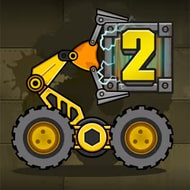
In Boxrob 2 you start each level staring at a cramped warehouse floor scattered with crates, and figuring out the correct push order before making a single move matters far more than moving quickly. One wrong push into a corner can lock a crate in place permanently, forcing a full restart.
The rules are simple on paper: guide the robot around the floor, push crates onto marked goal tiles, and finish once every crate sits where it belongs. What makes the game genuinely difficult is that crates can only be pushed, never pulled, which means a careless move toward a wall or another crate can make a level unsolvable without ever technically breaking a rule.
Beginners usually rush the first few pushes without mapping out the full sequence, and that habit catches up fast once levels introduce narrower floor layouts. The players who do best tend to trace backward from the goal tiles first, working out which crate needs to move last, then reasoning forward from there.
Compared to the difficulty most players remember from the earlier game in the series, Boxrob 2 leans harder into layouts where multiple crates depend on each other’s positioning, so a plan that ignores one crate to focus on another often backfires several moves later.
The undo option exists for a reason, and treating it as a planning tool rather than a last resort changes how the game actually feels to play. Testing a risky push, seeing whether it locks a crate against a wall, and undoing immediately if it does is far faster than restarting an entire level from scratch.
Players who lean on the move counter as a secondary goal, not just a completion requirement, tend to get more out of replaying levels once they’ve technically solved them, since shaving down an already-completed level’s move count becomes its own separate challenge.
By the time you reach the denser mid-game floors, single-crate thinking stops working entirely. Multiple crates often need to move in a specific relative order, and pushing the wrong one first can strand a second crate in a spot it can never leave. That interdependency is where the game earns its reputation for being genuinely tough rather than just fiddly.
One aspect players openly debate is the lack of a hint system for these denser layouts. Some appreciate having to work out every solution unaided, since it makes eventual solutions feel earned. Others think a light nudge after repeated failed attempts on the same layout would remove unnecessary frustration without undercutting the puzzle itself.
A common question new players ask is whether there’s ever a situation with no valid solution at all — every level is solvable as designed, so if a puzzle feels impossible, it almost always means an earlier crate push closed off the path rather than the layout itself being broken. Another frequent question is whether move count affects anything beyond bragging rights, and the honest answer is that it mostly matters to players chasing an optimal solution for its own sake rather than any in-game reward. Players also ask how many crates a typical late level involves, and while it varies by layout, denser floors commonly stack several crates whose paths cross, which is exactly what forces the backward-planning approach experienced players rely on.
Boxrob 2 rewards the kind of patient, backward-planning mindset that a quick glance at the crates and goal tiles never reveals on a first look, and that gap between how simple the rules sound and how carefully you actually have to think is what keeps the puzzle worth returning to.