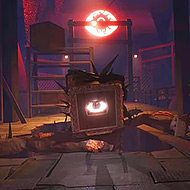
Doors The Foundation looks like a straightforward continuation of a hallway-crawling horror game, but it plays like something closer to a cave system that actively hunts you. Where the original Doors kept players moving through hotel corridors one door at a time, this fan-made continuation drops you beneath that hotel entirely, into a facility-and-cave hybrid that reuses familiar threats while introducing new ones nobody had names for on day one.
| Genre |
Roblox survival horror |
| Developer |
namegames |
| Release |
April 2025 |
| Structure |
Room-by-room progression across a set floor |
Falling Into The Foundation
The setup is simple on paper: something goes wrong with the hotel elevator, and instead of landing in the original game’s second floor, you end up somewhere new entirely. Guiding Light, a returning character from the base game’s death screen, plays a bigger narrative role here, since in this alternate reality she is what keeps you from falling straight into the Mines. That single change reframes the entire floor as a detour rather than a sequel, which longtime Doors players noticed almost immediately.
Rooms in this game function the same way they did in the original: you move through them one at a time, searching drawers and lockers for gold and useful items, occasionally buying gear from the Pre-Run Shop before a run even starts. What changes is the density and unpredictability of what’s waiting in those rooms once you cross into deeper sections of the floor.
Entities Old and New
Several threats carry over directly from Doors with minor behavior tweaks. Rush still triggers a lights-out sprint down the hallway that instantly ends your run unless you’re already hidden in a wardrobe, locker, or side room. It behaves close enough to its original version that veteran players react on instinct the moment the lights flicker.
Other entities are unique to this floor. Decoy hides inside lockers, using dark ooze and a pair of eyes peering through the gaps as the only warning before it drags an unsuspecting player inside for damage. Hide takes the form of bats that seem harmless individually, but riling them up triggers a screaming alert that summons a horde of other entities at once, turning a manageable room into a chaotic one within seconds. Rooms with no light source bring their own danger too, since lingering too long in total darkness invites an entangling threat that drains health steadily until you find a light source.
Screech and Stare round out the floor’s more reactive threats, each demanding a different response, whether that means staying still, staying quiet, or actively avoiding eye contact depending on which one shows up.
Progressing Through the Foundation’s Rooms
Early rooms stay relatively forgiving, letting new players learn item locations and shop mechanics without much pressure. By the time you reach the deeper sections, though, entity density climbs sharply, and rooms start layering multiple threats back to back rather than spacing them out the way the opening stretch does.
Beginners consistently make the same mistake: treating every hallway like the safe early rooms and rushing forward without checking for the ooze-and-eyes tell that signals a hidden Decoy nearby. Speed-focused players who barrel through without pausing tend to walk directly into ambush setups that cautious players avoid simply by checking corners first.
Community vocabulary around this floor borrows heavily from the base game’s terminology, with players referring to full-floor attempts as “runs” and comparing entity encounter rates the same way Doors veterans compare seed luck. One detail that only clicks once you’ve actually played it: the audio cues shift subtly the deeper you go, and players who rely on sound to track nearby threats have to relearn their instincts once the ambient noise floor changes.
What Divides the Community
Not every reaction to this floor has been positive. Some players feel the entity density in later rooms tips from tense into overwhelming, especially during Hide-triggered hordes where multiple threats converge on a single narrow hallway. Others argue that’s the point, and that a continuation set below the original hotel should feel more punishing than the source material. Both camps show up regularly in showcase video comments, and the disagreement hasn’t slowed the floor’s popularity down.
Item hunting through drawers and lockers rewards cautious players who explore side rooms fully, while cooperative players benefit specifically from splitting up to cover more ground before threats converge, since shared item pools make solo runs noticeably slower.
What happens when you finally see something you can’t unsee, whether that’s the ooze under a locker door or the way Guiding Light’s blue glow marks the path forward in a dark room, is exactly the kind of moment that makes Doors The Foundation worth finishing at least once. The combination of familiar mechanics and genuinely new threats like Decoy keeps the floor from feeling like a reskin, and that’s a harder balance to strike than it sounds.