Weekly Picks

Avatar World

Love Tester

Avatar World 2

Avatar World 2025

Shoujo City

SAKURA School Simulator

Avatar World Update

Yandere Simulator

Avatar World: City Life



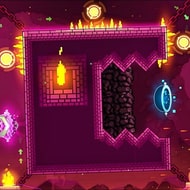
You tap once, misjudge the gap by a hair, and watch your cube crumble against a spike three seconds into a section you thought you’d already solved. That’s the rhythm of Geometry Dash Rat Challenge — a level built less around raw speed and more around forcing you to relearn timing every time the game shifts your form underneath you.
Like every Geometry Dash level, Rat Challenge runs on a single input principle: tap to jump, hold to keep jumping, and let go at the right instant to land clean. What makes this particular challenge distinct is how aggressively it swaps between forms — cube, ship, and ball sections stack close together, which means your muscle memory has almost no time to settle before the game asks something different of it.
Beginners usually fail this level the same way they fail most demon-adjacent challenges: they try to play by sight instead of by rhythm. The spikes and blocks are synced to the music, and players who ignore the beat and just react to what’s on screen tend to mistime jumps that would otherwise be trivial if timed to the track.
Practice mode is the honest answer to almost every question about how to get better here. Placing checkpoints before a tricky ship section, isolating it, and running it in a loop until the input feels automatic is the standard approach the community uses, and it’s genuinely faster than attempting full runs over and over.
The wave and ship transitions are where most attempts die, according to player consensus. A cube section forgives small timing errors because you’re on the ground, but the moment the level shifts you into a wave segment, the margin for error tightens considerably and there’s no ground to correct against.
Three player types tend to show up in discussions of this challenge. Completionists grind the level in practice mode until every segment is memorized before ever attempting a full run. Speed-focused players skip straight to full attempts, accepting more deaths in exchange for building raw pattern recognition faster. Casual players often just want to see the level’s design once through practice mode without ever chasing a clean completion, and that’s a completely normal way to experience it too.
Players describe a section as “buffed” when a version feels harder than what they remember, and “nerfed” when it’s been eased. You’ll also hear people call a tight memory-heavy section a “memory block” — a stretch where blind reaction isn’t enough and you genuinely need to have run it before to survive it.
In player communities, this challenge is talked about less for a single brutal jump and more for its pacing — the way difficulty ramps in short, unpredictable bursts rather than one long grind. That unpredictability is exactly what a lot of players searching for a rat challenge percentage guide are trying to work around, since knowing where the spikes in difficulty sit ahead of time changes how you approach practice runs.
One honest criticism that comes up often: the visual noise in the busier sections can make it hard to tell which obstacles are actually solid versus decorative, and that ambiguity frustrates players who otherwise enjoy the level’s design.
There’s no official count, but players who practice each section in isolation before a full run generally clear it faster than those who attempt blind runs from the start, since the wave and ship transitions punish unfamiliarity hardest.
It sits above the average difficulty most players encounter early in the game, mainly because of how quickly it changes forms rather than any single impossible jump.
Not entirely — some sections reward rhythm and reaction over memory, but the wave-heavy stretch is widely considered the one part where prior familiarity matters most.
Whatever route you take through it, Geometry Dash Rat Challenge rewards the same thing every serious attempt eventually teaches you: trust the beat, isolate what keeps killing you, and treat every checkpoint as a small level of its own.