Weekly Picks

Avatar World

Love Tester

Avatar World 2

Avatar World 2025

Shoujo City

SAKURA School Simulator

Avatar World Update

Yandere Simulator

Avatar World: City Life


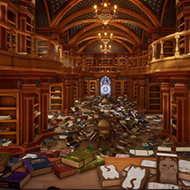
You open on a single case file with no name of your own, no badge, and no context beyond a photograph of Richard Green — and from that first page, Librarian: Tidy Up The Arcane Library! makes it clear that piecing together how he died is the only job you have.
Every interaction runs through a single virtual hand that the mouse controls directly — reaching into drawers, tilting photographs, and lifting objects that might otherwise stay hidden in a static scene. It’s an unusually tactile way to explore a crime scene, and it’s also where the game earns its most divisive feedback: dragging that hand precisely enough to draw with is noticeably harder with a mouse than the game seems to assume, and more than a few players admit the input took real getting used to before it felt natural.
What beginners get wrong early on is rushing past objects instead of tilting and zooming into every one the virtual hand can reach. Richard Green’s case doesn’t hand you evidence outright; it hides positioning details in objects that look incidental until you’ve actually turned them over.
Once a trace is found — a dropped object, a weapon, a rope left at an odd angle — the game hands you a drawing tool and asks you to recreate its exact position and shape from memory of the scene. Get the angle wrong and the reconstruction simply won’t match what the sketchbook expects, which is the game’s quiet way of forcing a second, closer look rather than penalizing you outright.
Alongside the sketching, fragments of suicide notes, diary entries, and half-heard conversations arrive with words missing entirely, and filling them correctly is often the only way the story around Richard Green’s death actually clicks into place. Players who treat this step as filler tend to miss the twist the case is quietly building toward.
Most players finish Richard Green’s case in five to ten minutes, though piecing together every fragmented note and trace correctly on a first attempt usually takes longer than that.
Many players find it stiffer than expected at first — the virtual hand rewards slow, deliberate movement rather than quick dragging, and that adjustment period is one of the more commonly discussed rough edges of the game.
No — the game lets you revisit objects and redraw traces rather than locking you out, so a missed angle on a rope or a dropped item just means another careful pass with the virtual hand.
By the time Richard Green’s story resolves, what stays with most players isn’t the mystery itself so much as the sketchbook’s insistence on precision — Librarian: Tidy Up The Arcane Library! never explains why a drawn angle mattered until the reconstructed scene suddenly makes the whole case make sense.