In Slendrina Remake you start with nothing but a flashlight and a locked way out, which matters more than it sounds like it should. Every decision in the opening minutes — which direction you explore first, how much battery you burn checking dead ends — shapes how much trouble you’re in once Slendrina actually starts appearing.
| Genre |
Survival horror, puzzle |
| Core Objective |
Collect 8 keys to open the coffin and escape |
| Main Threat |
Slendrina and Slendrina’s Child |
| Setting |
An abandoned basement and cellar complex |
The Collection Loop at the Heart of Slendrina Remake
The entire game is built around one central task: find 8 keys scattered through the map and use them to open the coffin. It sounds mechanical written out like that, but the tension comes from where those keys are placed. Some sit in plain view in rooms you’ll pass through naturally; others require solving small environmental puzzles or backtracking through areas you thought you’d already cleared.
New players consistently make the same early mistake — they rush toward every open doorway without checking their surroundings first, which is exactly the kind of carelessness that gets you caught off guard. The game punishes speed over awareness, especially once you’re carrying several keys and have more to lose from a bad encounter.
By the time you’ve collected four or five keys, the pacing shifts noticeably. Slendrina appears more frequently, and the map that felt merely creepy in the first ten minutes starts to feel actively hostile. This escalation is deliberate, and it’s one of the clearest signs the game is tracking your progress rather than running on a flat timer.
Don’t Look At Slendrina — The Rule That Defines the Game
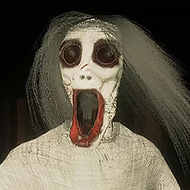
The single rule every player learns fast: if Slendrina appears, look away immediately. Staring at her for too long ends the run. This mechanic turns simple navigation into a constant risk calculation, because checking your surroundings for clues also means risking direct eye contact with the exact threat you’re trying to avoid.
Once Slendrina’s Child starts appearing alongside her mother, the calculation gets harder. You’re no longer managing one unpredictable threat but two, and players often describe this stretch of the game as where casual exploration stops being viable entirely.
A detail longtime players bring up in discussions: the ambient audio changes pitch subtly right before Slendrina spawns nearby, and players who play with sound on get a fraction of a second more warning than those who don’t. It’s not a guaranteed tell, but it’s consistent enough that veteran players treat it as one.
Managing Batteries and the Flashlight
Your flashlight is not infinite, and running out of battery in the wrong room is one of the more common ways new players lose progress. Batteries are scattered near the same areas as keys, which forces a constant trade-off between exploring fully and conserving light for when you actually need it.
Doors, Locks, and Backtracking
Not every locked door in the game relates directly to the 8-key objective — some hide optional areas with hints or shortcuts. Recognizing which locks matter for progression and which are optional side content is something most players only learn after a full playthrough or two.
Player Approaches That Actually Work
Completionists tend to map the entire layout mentally before committing to grabbing every key, minimizing the number of times they cross paths with Slendrina unnecessarily. Players newer to horror games often play far more cautiously, checking corners constantly, which slows them down but genuinely reduces how often they get caught off guard.
- Clear nearby rooms before moving deeper into the map
- Keep at least one spare battery in reserve at all times
- Break line of sight the instant Slendrina appears, don’t hesitate
One thing players openly criticize is how sudden Slendrina’s appearances can feel in tight corridors, where there’s barely enough reaction time to look away before the encounter is already over. It’s a divisive point — some think it fits the horror tone perfectly, others find it closer to unfair than tense.
What Players Search For Before Starting
A common question is what happens if you accidentally glance at Slendrina for just a moment — the answer is that brief accidental glances are usually survivable, but sustained eye contact for even a couple of seconds is what triggers the fail state. Another frequent question involves whether key locations are randomized between playthroughs; broadly, the general layout stays consistent, which is why experienced players can move through familiar sections with much more confidence than first-timers. Players also ask whether Slendrina’s Child behaves differently from Slendrina herself, and most agree the child spawns more erratically, making her presence harder to predict even once you’ve learned the mother’s general patterns.
Slendrina Remake succeeds by keeping its core threat simple to explain and genuinely stressful to manage in practice, and that tension between the 8 keys you need and the coffin you’re trying to reach is what keeps players coming back even after they’ve technically seen everything the basement has to offer.