You step off a rattling train into a village pressed against the edge of the Siberian taiga, and before you’ve even unpacked, Tiny Bunny makes it clear that this move was never just about a new school. You’re playing as Anton, a boy whose family relocates for reasons his parents won’t fully explain, and within the first few in-game days the wallpaper-thin normalcy of village life starts to peel at the corners.
| Genre |
Psychological Horror Visual Novel |
| Platform |
PC, Android |
| Release |
2021 (Episode 1), concluded 2023 |
| Episodes |
5 |
Arriving in the Village Anton Can’t Leave
The setup sounds mundane: a family moves to a quiet taiga village, the kid struggles to fit in, homework and awkward friendships follow. Tiny Bunny leans into that mundanity on purpose, because the horror isn’t a monster jumping out of a closet, it’s the slow realization that the woods have opinions about who gets to leave. Anton’s little sister Olya starts having nightmares almost immediately, and the game never rushes to explain why.
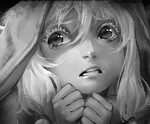
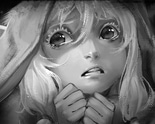
Most of the early hours are dialogue and quiet exploration, told through hand-drawn, largely monochrome art that makes the rare splash of color feel like a warning. Players expecting jump scares often get restless here, not realizing the pacing itself is teaching them to notice details they’d otherwise skim past.
By the time the first real disruption hits, you’re already invested enough in Anton’s routine that losing it stings. That’s exactly the point.
What Tiny Bunny Hides Behind Its Monochrome Art
The black-and-white presentation isn’t a budget shortcut, it’s doing narrative work. Scenes that matter emotionally get subtle shading shifts, and forum regulars have spent real time cataloguing which panels use gray gradients versus flat black, treating it like a second layer of text. That close-reading habit is common with visual novels, but Tiny Bunny rewards it more than most, since certain foreshadowing only reads clearly in hindsight.
Character portraits shift subtly across chapters too, through posture and expression rather than obvious redesigns, and players who notice Anton’s stance changing after a bad night tend to bring it up unprompted.
None of this is explained through tutorial text. Tiny Bunny trusts you to notice or not, which is why community threads are full of “wait, I missed that?” moments.
Anton, Olya, and the Voice That Isn’t Quite the Forest
The taiga itself behaves like a character, and longtime players just call it “the forest,” even though what’s actually influencing events is closer to a voice speaking through the forest rather than the trees themselves. It doesn’t announce itself as a villain. It offers, it suggests, it occasionally sounds almost kind, which is worse.
Olya’s nightmares are the clearest early sign this influence isn’t confined to Anton’s imagination. When her nights get worse, something in the plot is about to move, and watching for that pattern pays off.
Reading Tiny Bunny as a Choice-Driven Visual Novel
Mechanically, this is a point-and-click visual novel where dialogue choices and small interactive moments steer which of the game’s branches you land in. There’s no combat and no failure state in the traditional sense, the tension comes entirely from not knowing which of your choices are cosmetic and which are quietly reshaping the back half of the story.
- Branching dialogue: Conversations with Olya, Polina, and other villagers shift future scenes in ways that aren’t always flagged.
- Environmental reading: Rooms and backgrounds sometimes contain details worth pausing on before advancing text.
- Chapter structure: The five episodes each escalate the influence of the forest a little further, rather than resetting tension between them.
New players often try to treat it like a standard adventure game with a single correct path, and get frustrated when nothing “unlocks.” Tiny Bunny works better if you accept that some choices exist purely to tell you who Anton is, not to open a door.
Polina and the Choices That Don’t Feel Like Choices
Polina, Anton’s love interest, is where a lot of the game’s quieter dread lives. Scenes with her often read as sweet on the surface, first-crush awkwardness, shared jokes, but the framing keeps hinting that this normal teenage subplot is being watched, or used, by something else. Players frequently mention how uncomfortable it feels to enjoy those scenes once you suspect they’re not entirely private.
The relationship never turns into a simple horror twist either, which is part of why it sticks with people. It stays tender even as the surrounding story gets worse, and that contrast is doing a lot of the emotional damage by the later episodes.
Where Most Players Get Their First Bad Ending
New players usually hit their first bad ending somewhere in Episode 2 or 3, often by treating a conversation with Olya as unimportant filler and clicking through it quickly. Tiny Bunny doesn’t punish you immediately, it lets the consequence surface an episode later, which means most people don’t connect the dots until they check a guide or compare notes with someone else who played differently.
The most common early mistake is assuming silence is a neutral choice. In several key scenes, saying nothing is itself a decision the forest notices.
Chasing the Route Toward “Where’s My Boy”
Among the game’s roughly twenty possible endings, “Where’s My Boy” gets brought up constantly because of how it recontextualizes earlier scenes once you know where it’s headed. Reaching it requires a specific pattern of protective choices toward Olya across multiple episodes, and players trying to hit it deliberately usually end up tracking their own choices in order, roughly like this:
- Prioritize Olya’s wellbeing over curiosity whenever the two conflict.
- Avoid dismissing her nightmares as ordinary childhood fears.
- Keep Anton’s scenes with Polina warm rather than distant, without letting them replace his attention to his sister.
It’s not the darkest ending Tiny Bunny has, but it’s the one people quote most in reviews. It turns Anton’s role in the story from participant to something closer to sacrifice.
The Long Way Down to the Doomsday Ending
At the other extreme sits the ending fans nickname around the “Planet Eater” outcome, where Anton stops resisting the forest’s influence entirely. Getting there involves consistently choosing curiosity or compliance over caution whenever the game offers that fork, and it’s usually the ending first-time players stumble into by accident, then immediately restart the game to avoid keeping.
What makes it effective isn’t gore, Tiny Bunny barely uses any. The game keeps its monochrome restraint even here, letting implication do the work a jump scare would in a louder horror game.
Community Talk: Endings, Symbols, and What Tiny Bunny Leaves Out
Fan discussion leans heavily on ending comparison and symbol-hunting, trading theories about recurring imagery long before any of it gets confirmed. The game also divides opinion on pacing, the slow-burn first half being exactly what some players love and what drives others to a walkthrough out of impatience.
That divide isn’t a flaw so much as a filter, built for people willing to sit with unease rather than have it resolved quickly.
Is Tiny Bunny based on a true story?
No, but it draws heavily on a short story by Dmitry Mordas. That literary root explains why the pacing reads more like a novel than a typical horror game script, favoring slow character work over scripted scares.
How many endings does Tiny Bunny have?
Across its five episodes the game branches into close to twenty distinct endings, ranging from quietly hopeful to the bleak “Planet Eater” outcome. Most of them land somewhere uneasily in between, closer to bittersweet than clearly good or bad.
Do I need to play the episodes in order?
Yes. Choices in earlier episodes, especially involving Olya and Polina, carry weight into later chapters, and skipping ahead breaks the game’s central hook of consequences arriving late.
By the time the credits roll on whichever ending you land on, Tiny Bunny has usually stopped feeling like a game about a haunted forest. It starts feeling like a game about Anton, Olya, and how much of themselves survives contact with something that was never going to explain itself.